Free SEO resource
Free SEO course for beginners, timestamped
A 5 hour 44 minute free SEO course for beginners with the chapter deep-links, screenshots and the pages on this site that each chapter connects to.
A free SEO course for beginners recorded in one sitting, five hours and forty-four minutes long, covering fundamentals through content quality, search intent and the whole keyword-research process. Every chapter timecode links to the exact second in the video. Each chapter also names the roadmap lesson on this site that goes further on the same subject, so the video is the walkthrough and the roadmap is the depth layer.
- Best for
- A beginner who wants one long teaching pass through SEO before reading anything else
- Includes
- 5h 44m video, 7 chapters, timestamped deep-links, chapter screenshots, roadmap map
- Time to use
- 5–6 hours end to end, or an hour a night for a week

Most beginner SEO tutorials are short because short is easier to publish. This one is 5 hours and 44 minutes because SEO is not short, and the loop where a beginner keeps rewatching a 12-minute overview and never actually starting is what a real course exists to break.
Below is the whole video with the chapter list, the deep-links, and the roadmap lesson on this site that each chapter turns into once you want to go deeper.
Watch on YouTube: youtube.com/watch?v=2MbdlibCIIY. Every timecode on this page is a link into the exact second.
Chapter 1 — Opening and how search works
Start at 0:00 — the first minute states the assumption the course is built on: you know nothing about SEO, and everything downstream is going to earn that assumption.
The opening frame at 3:00 sets the register: on camera, one presenter, no clip-cutting between takes. That is deliberate. A beginner who joins a course and never sees the person teaching it has a harder time trusting the argument, which matters most in the section that argues against the industry.
The lesson to read next: SEO fundamentals. It carries the whole “how search works” model the video’s first hour opens up, with the pipeline stages named, every claim graded, and the eight-way distinction between crawl, index and retrieve that most beginner content collapses into one word.
Chapter 2 — Content quality, and what “good” actually means
Jump to 1:00:00 — the content-quality section starts around the one hour mark and runs deep into hour two. This is the part most beginner courses skip because “make it good” is not a lesson.
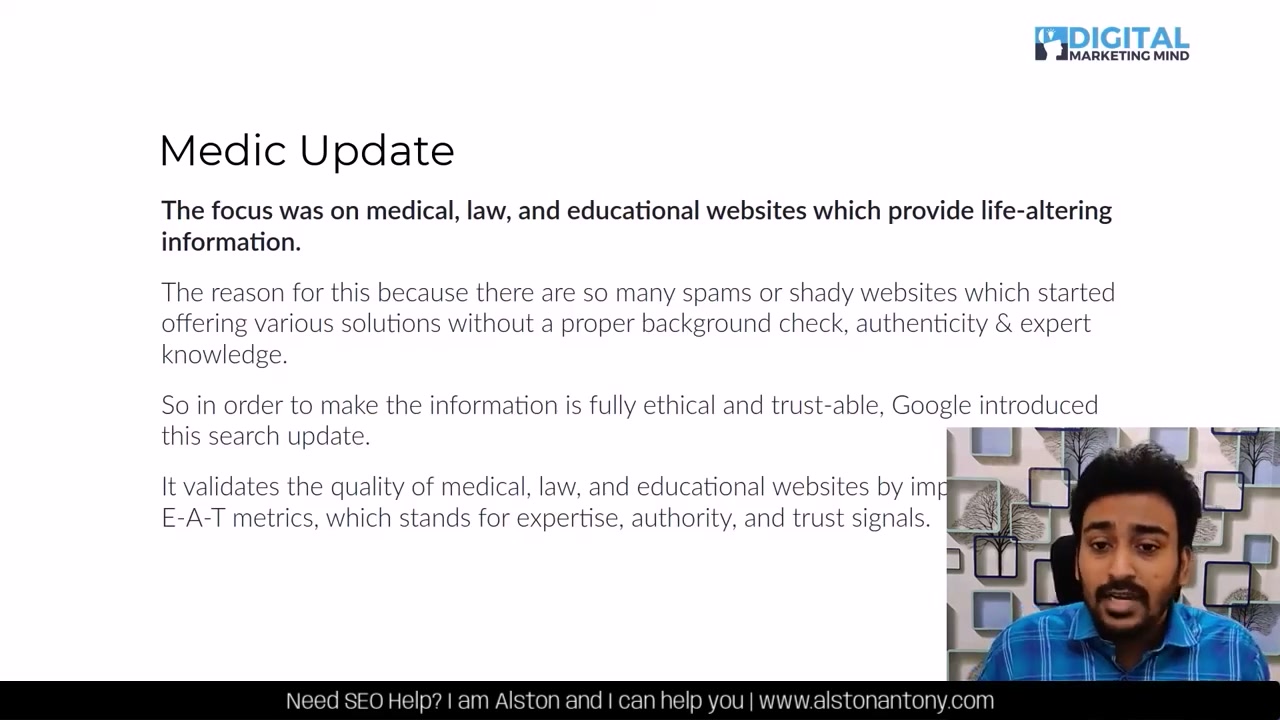
What the video does that a written guide cannot: it spends real time on the question of why a well-optimised bad page loses to a genuinely useful one. If you have ever wondered why a page ticking every on-page checklist still does not rank, this section is where you find out.
Go deeper: Content SEO. The lesson audits eight rival guides on this same subject from raw HTML, publishes the numbers, and grades every claim in the industry playbook against a source. It is what happens when the argument in this chapter is written down and evidenced.
Chapter 3 — Search intent
Jump to 1:45:00 — search intent gets its own block before keyword research, which is the right order. Understanding what a query means comes before finding queries.

The video groups queries into four intents and shows what each looks like on the results page. If you have ever picked a keyword by volume and written the wrong page for it, this is the section that names the mistake. It is also where the course starts to name specific tools, which is your cue that the fundamentals are done.
Go deeper: Search intent. The lesson turns four intents into seven questions to answer about a query before you draft anything, and ships a brief builder that refuses to call itself finished until they are answered.
Chapter 4 — Keyword research: the process
Jump to 2:15:00 — keyword research is the largest single block of the course, roughly 170 minutes, because most beginner courses treat it as one step and it is actually six.
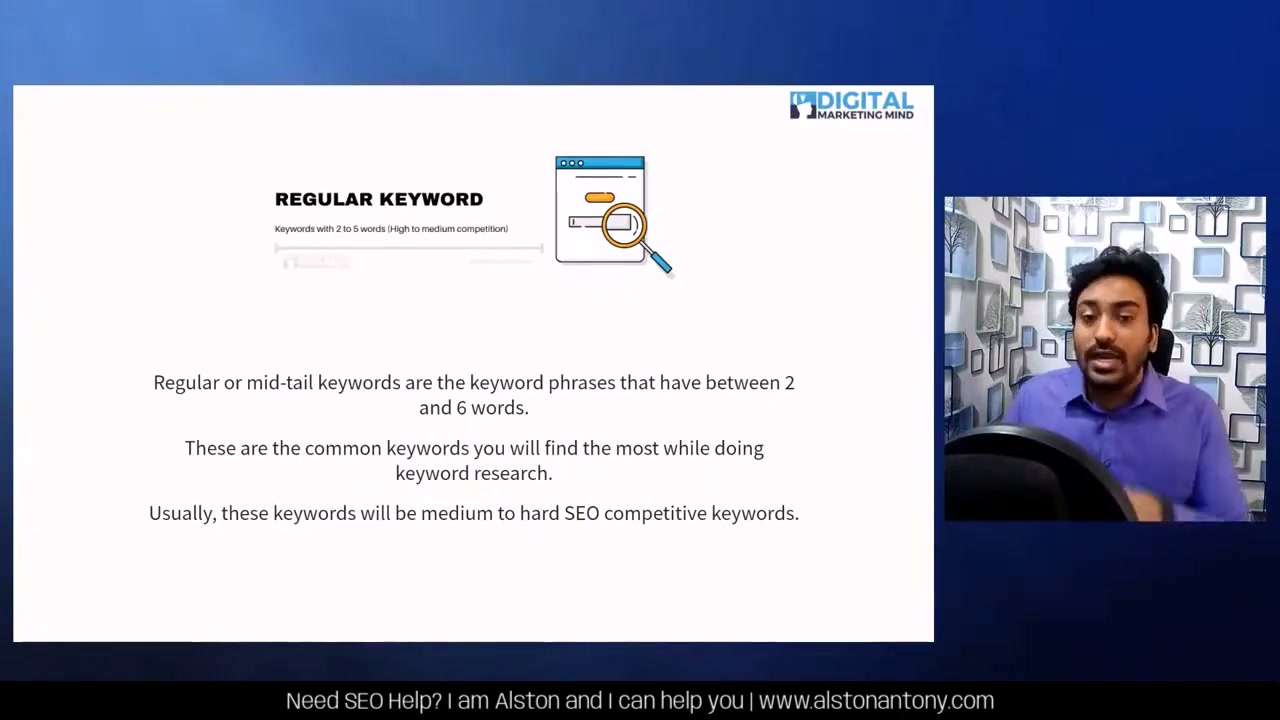
What separates this section from the standard three-step framing: the video walks through the difference between finding a keyword and validating it, which is where most beginner keyword lists fall apart. A keyword you found is not a keyword you can rank for.
Go deeper: Keyword research and search demand. The lesson is the six-stage version of what the video teaches as one long block, with the local keyword database of 152,251 rows across five Ahrefs exports checkable against your own market.
Chapter 5 — Keyword research: the metrics that matter
Jump to 2:40:00 — search volume, keyword difficulty, CPC, the whole metric layer.
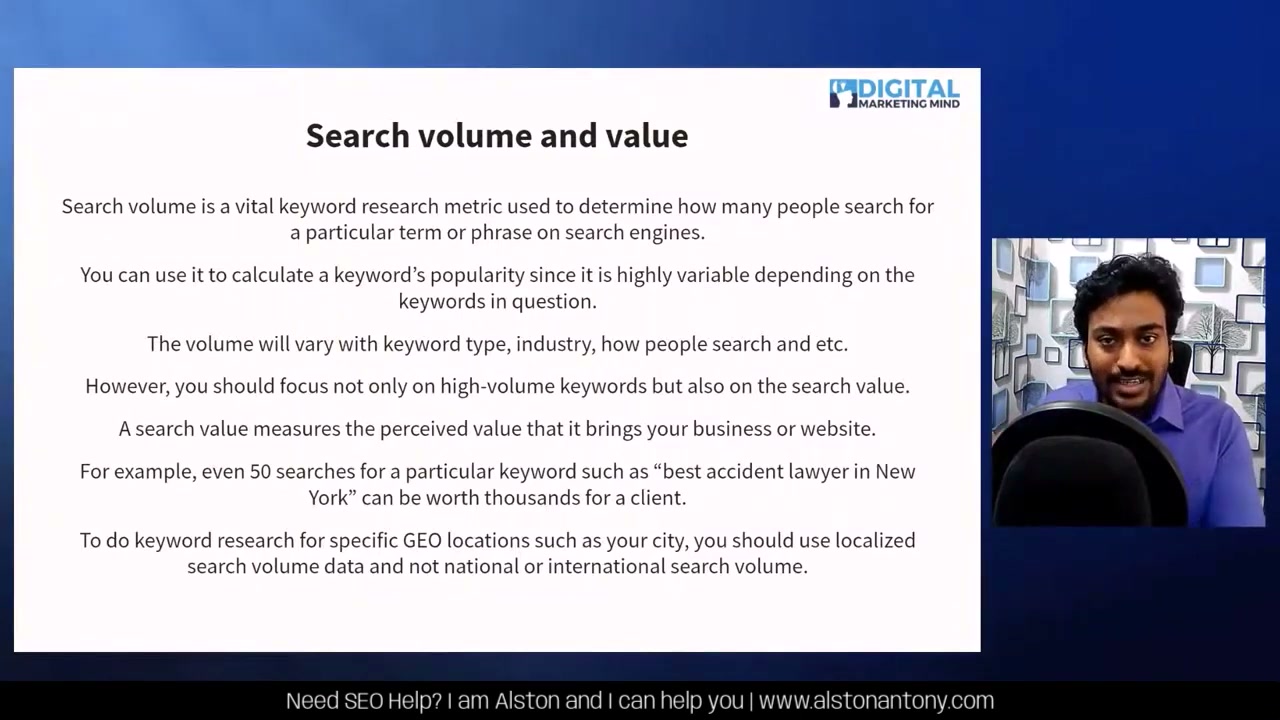
The section every beginner needs and every course does badly. Watch what the video does with the difficulty score: it does not tell you to trust it. It tells you to use it as a sort, and to open the actual results page before committing. That is the single most expensive mistake a new SEO makes with a keyword tool and it is worth watching three times if it is new to you.
Go deeper: Keyword research again, specifically the chapter that shows the same keyword reading 655,000 volume in one Ahrefs pull and 243,000 in another, from one account on one day.
Chapter 6 — Keyword research: the practical run
Jump to 3:20:00 — the “sit down and do it” section, where the theory becomes buttons.
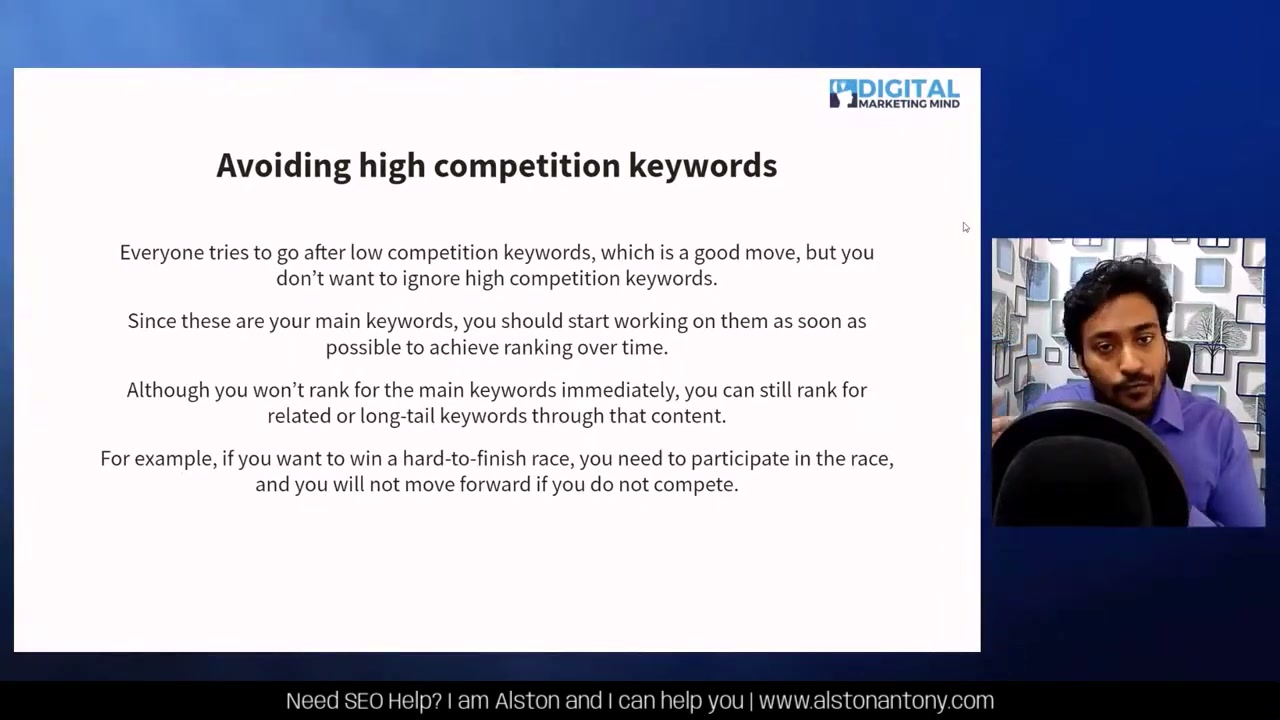
This is the point in the video where you should have a topic of your own on the second screen and be running each step against it. Not against the topic in the video. If you watch this passively you get an hour of tool demos; if you run your own topic in parallel you get a first draft of a keyword plan by the time it ends.
Go deeper: Keyword research template. The Excel workbook with the three tabs, ten columns and the calculated priority score, so the practical output of this chapter has somewhere to land.
Chapter 7 — Keyword research: filtering and prioritisation
Jump to 4:20:00 — the last major block, on going from a raw keyword dump to a shortlist worth writing about.
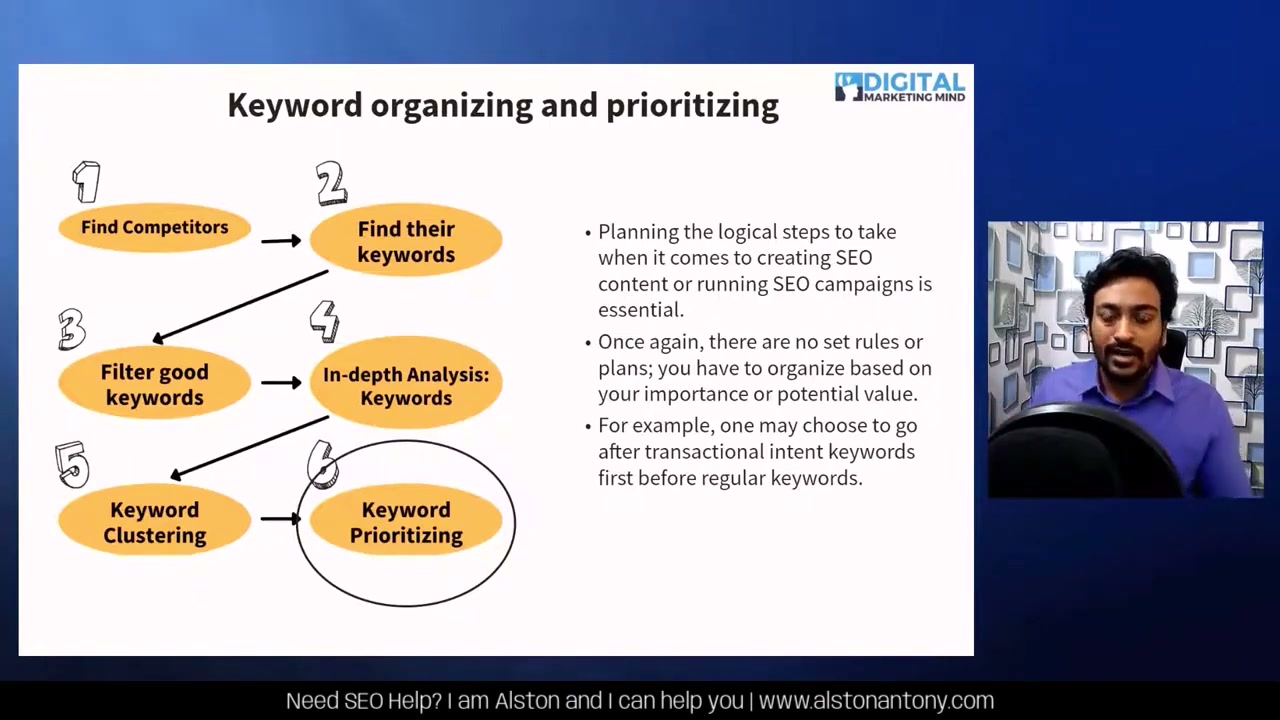
Filter order matters. The video applies match type, volume floor, difficulty and intent in that order, and it is worth listening for the moment where a single filter takes a 700,000-row list down to something you can act on. A beginner who leaves this section without a filter order will spend the next month unable to decide what to write, because everything looks like it might work.
Go deeper: SEO tools directory for the current prices and the report limits on the tools the video demonstrates, and keyword research for the six-stage spine this chapter’s filter logic slots into.
What the course does not cover
The video is 5 hours 44 minutes and it deliberately stops before some subjects most beginner courses tack on badly. Named on purpose so you know what to read next:
- Site architecture and internal linking. The video mentions it in passing. SEO site architecture is the lesson, and the folder-tree opinion the industry sells is what it argues against.
- Search everywhere: Reddit, YouTube, AI answers. Google is no longer the whole surface, and where the traffic goes now needs its own lesson. Search everywhere optimization.
- Technical SEO deep dives. Log files, crawl budget, JavaScript rendering. A beginner does not need these before their first ranking; the course is honest about that.
- AI SEO specifically. Retrieval-facing writing, LLM citation, how AI Overviews change the click. Emerging area, moving fast, worth a separate lesson: AI SEO.
The course is the pass. The roadmap is the depth. Start on the SEO roadmap if you want the map before you press play, or use the chapter list above if you want to press play and read afterwards.