SEO
SEO Digital Marketing Fundamentals For Your Business
The SEO fundamentals behind digital marketing for your business: search demand, on-page, technical, local SEO, links and measurement, plus a 90-day plan.

TL;DR: SEO digital marketing means earning search visibility instead of renting attention. There are seven fundamentals: a crawlable website, researched search demand, one page per intent, working technical basics, local SEO, real authority, and measurement in Search Console. This guide covers each one, then gives you a 90-day plan that starts with the free tools.
My mother runs a tailoring education business in India. No marketing budget. No agency. No technical background. I taught her the fundamentals in this guide, and today her website brings in around 5,000 visitors a day, almost all of it from search.
She did not learn paid ads. She did not learn funnels. She learned what people type into Google and how to build a page that deserves to answer it.
I have been doing SEO for 15+ years. I have built 100+ websites, run two agencies, and taught 30,000+ students. This guide is the SEO half of digital marketing, which is to say the half that compounds. I am going to show you what actually decides whether your business gets found in search, in the order you should work on it, and what you can safely ignore for the first year.
By the end you will know:
- What SEO digital marketing is, and how it relates to the rest of your marketing
- Why search is the channel a small business should build on first
- The seven fundamentals, with honest timelines for each
- How to turn a customer profile into a keyword list
- A 90-day plan that costs nothing but time
Let’s get into it.
What Is SEO Digital Marketing?
SEO digital marketing is the practice of earning visibility in search results, rather than buying it, so that people looking for what you sell find your business at the moment they are looking.
That definition contains the whole reason it matters. Search is the only major channel where the customer arrives already asking. Someone typing “emergency plumber Coimbatore” or “invoicing software for freelancers” has told you their problem, their intent and often their budget before they ever reach your site. No amount of audience targeting on a social platform reproduces that.
The mechanics come down to four repeated steps:
- Find the demand. What are your customers actually typing, and how many of them?
- Build the page. One page that answers one query more completely than what currently ranks.
- Make it findable. Crawlable, indexable, fast, internally linked, and corroborated by other sites.
- Measure it. Which queries you appear for, at what position, and whether that traffic converts.
Everything else in SEO, and there is a lot of everything else, is a refinement of one of those four steps. If you are new to the mechanics themselves, the SEO beginners tutorial walks through them slowly and in order; this guide is about how they fit into marketing a business.
Where SEO Sits in the Rest of Your Digital Marketing
SEO is one channel, not all of them. But it is the channel the others lean on, and that is why it belongs first in the plan.
Think about where every other channel sends people. A Facebook ad sends them to your website. A LinkedIn post sends them to your website. An email newsletter sends them to your website. Your Google Business Profile sends them to your website. If that website cannot be found on its own, you are paying for every single visit forever.
Here is the honest division of labour:
| Channel | What it is good at | What it cannot do |
|---|---|---|
| SEO | High-intent traffic that compounds and keeps arriving without spend | Produce results this month |
| Content marketing | Building trust and feeding SEO with pages worth ranking | Work without distribution or search demand behind it |
| Local SEO | Calls and directions from people nearby, fast | Reach anyone outside your service area |
| Social media | Relationships, brand, demand creation | Capture demand that already exists |
| The highest ROI per send, to people who already know you | Reach anyone who has not found you yet | |
| Paid ads | Immediate traffic and fast learning about what converts | Keep working after you stop paying |
Notice that social and paid ads create or rent demand, while SEO and local SEO capture it. A business with no customers yet needs both. A business with a limited budget should build the capturing side first, because it is the only side that keeps working when you stop.
This is not me being a purist. I run paid campaigns. I just do not run them before there is a website worth sending the clicks to, and I learned that from a client, a local mattress shop, who spent the equivalent of $3,000 on Facebook ads with no website, no tracking and no plan. The traffic arrived. Nothing happened to it.
Why Search Is the Foundation: 4 Reasons That Actually Hold Up
1. An SEO Page Is an Asset, Not an Expense
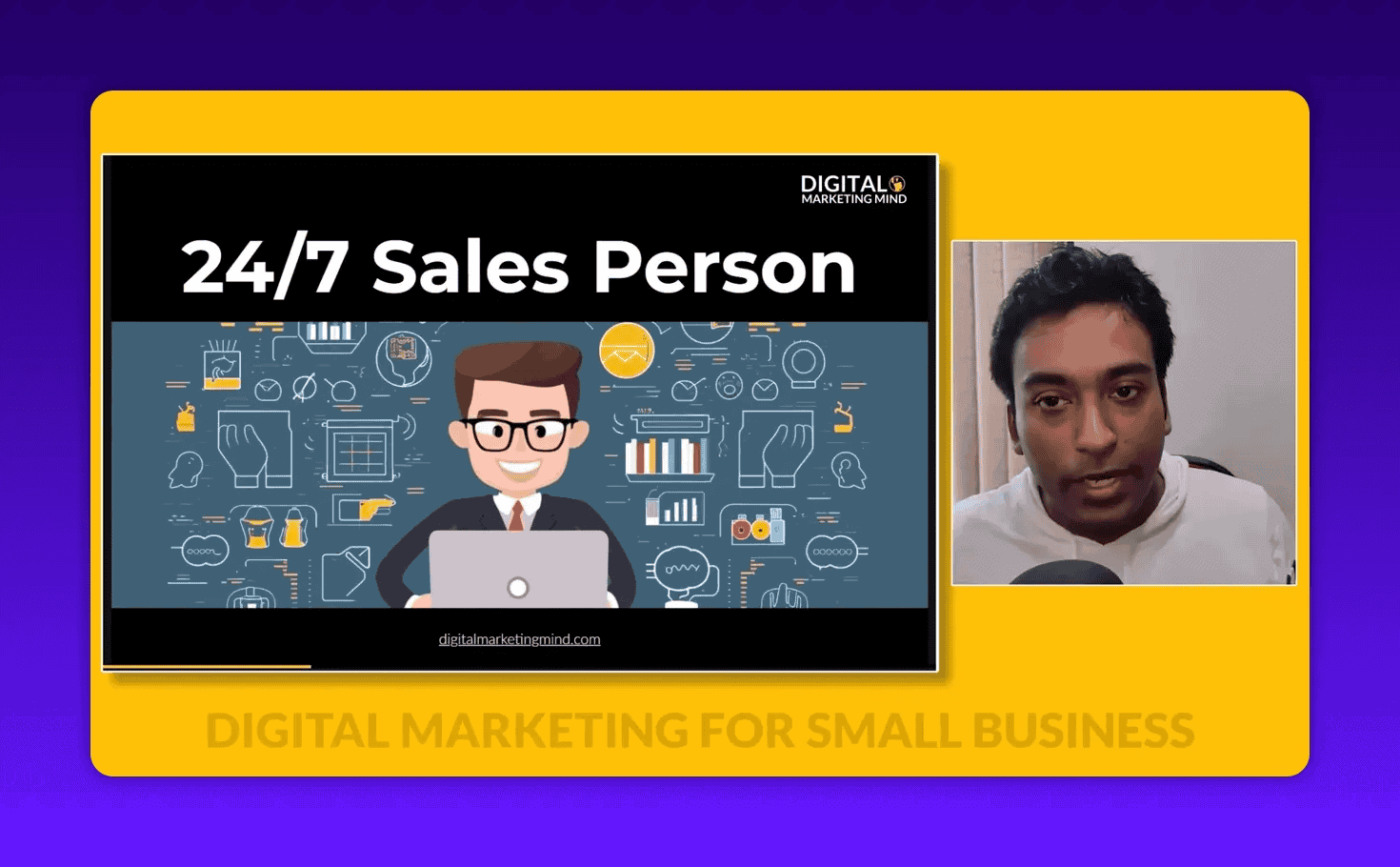
A paid ad is a rental. The day your card declines, the traffic stops.
A page that ranks is an asset on your balance sheet. It works at 2 a.m., on a public holiday, while you are asleep, and it keeps working next year. I have pages I wrote in 2019 that still bring in leads today and have cost me nothing since the day I published them.
That difference compounds. Ten ranking pages do not produce ten times the traffic of one; they produce more, because internal links and topical authority make each new page easier to rank than the last.
2. The Entry Cost Is Time, Not Money
Traditional advertising is all-or-nothing. Digital advertising is at least incremental. SEO is the only channel where the minimum viable budget is genuinely zero.
Everything you strictly need is free:
- Google Search Console — the queries you already appear for, and your position on each
- Google Analytics 4 — what visitors do once they arrive
- Google Business Profile — your listing in Maps and local results
- Bing Webmaster Tools — free keyword data and a second index that increasingly feeds AI answers
Paid tools like Semrush and Ahrefs make competitive research faster and are worth their $100 to $200 a month once you are working at scale. They are not a prerequisite. If you want to see what the paid workflow actually looks like before you buy, the Semrush tutorial walks through it, and there are cheaper options in the SEO tools directory.
3. Search Is the Most Honestly Measurable Channel You Have
With a newspaper ad you guess. With social you get engagement numbers that do not map cleanly to money. With search you get the query.
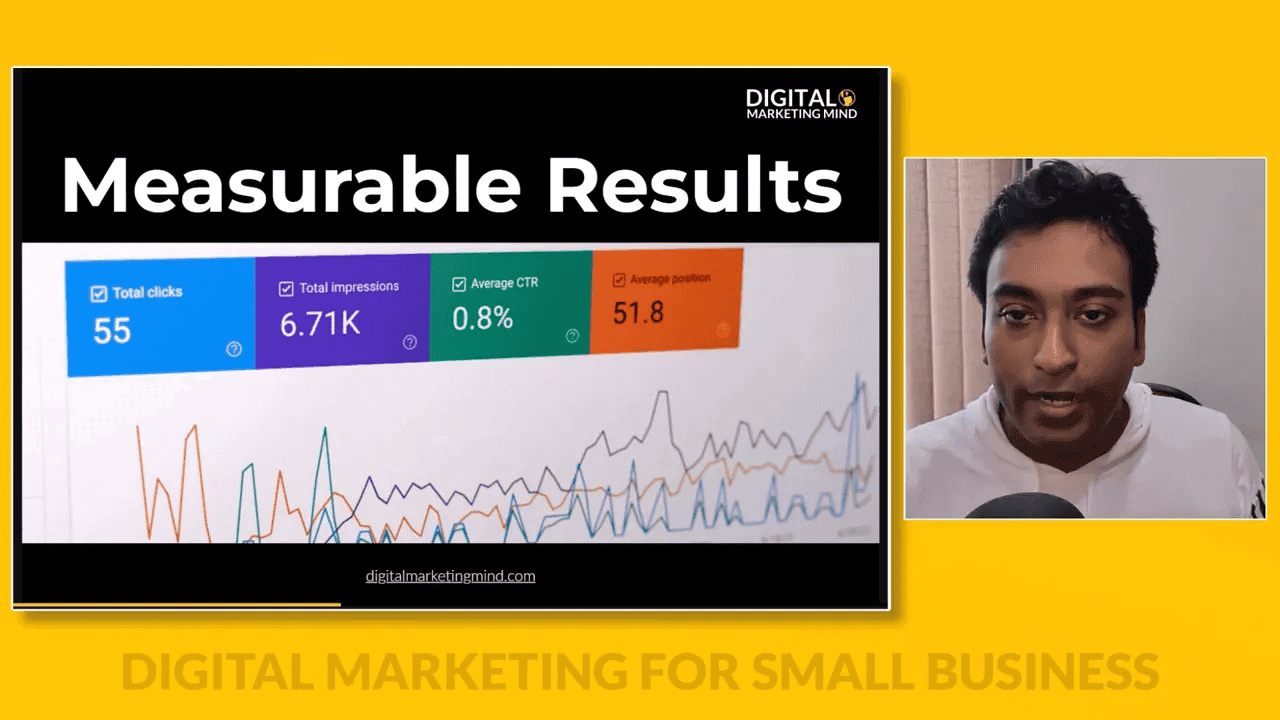
Search Console tells you the actual words a person typed, the position you held, how many people saw it and how many clicked. That is diagnostic data, not vanity data. A page sitting at position 12 for a query with real commercial intent is a specific, fixable problem with a known payoff. Nothing else in marketing hands you a to-do list that concrete.
4. Search Is Where a Small Business Can Actually Beat a Big One
In paid channels, budget wins. In search, relevance wins more often than people expect.
A single-location bakery can outrank a national chain in Maps because the chain’s location page is generic and the bakery’s profile is complete, reviewed and locally relevant. A one-person consultancy can outrank a funded competitor on a specific comparison query because the competitor wrote a brochure page and you wrote the answer.
I have watched this happen repeatedly across the sites I have worked on, and you can see the pattern in the case studies. Knowledge and consistency beat budget in search far more often than they do anywhere else.
The 7 Fundamentals of SEO Digital Marketing
This is the core of the guide. Work through these in order. Each one is a prerequisite for the ones after it, which is why the order matters more than the individual tactics.
1. A Website That Can Actually Rank
Your website is not a marketing channel. It is the thing all your marketing points at, and it is the only asset in this list you own outright.
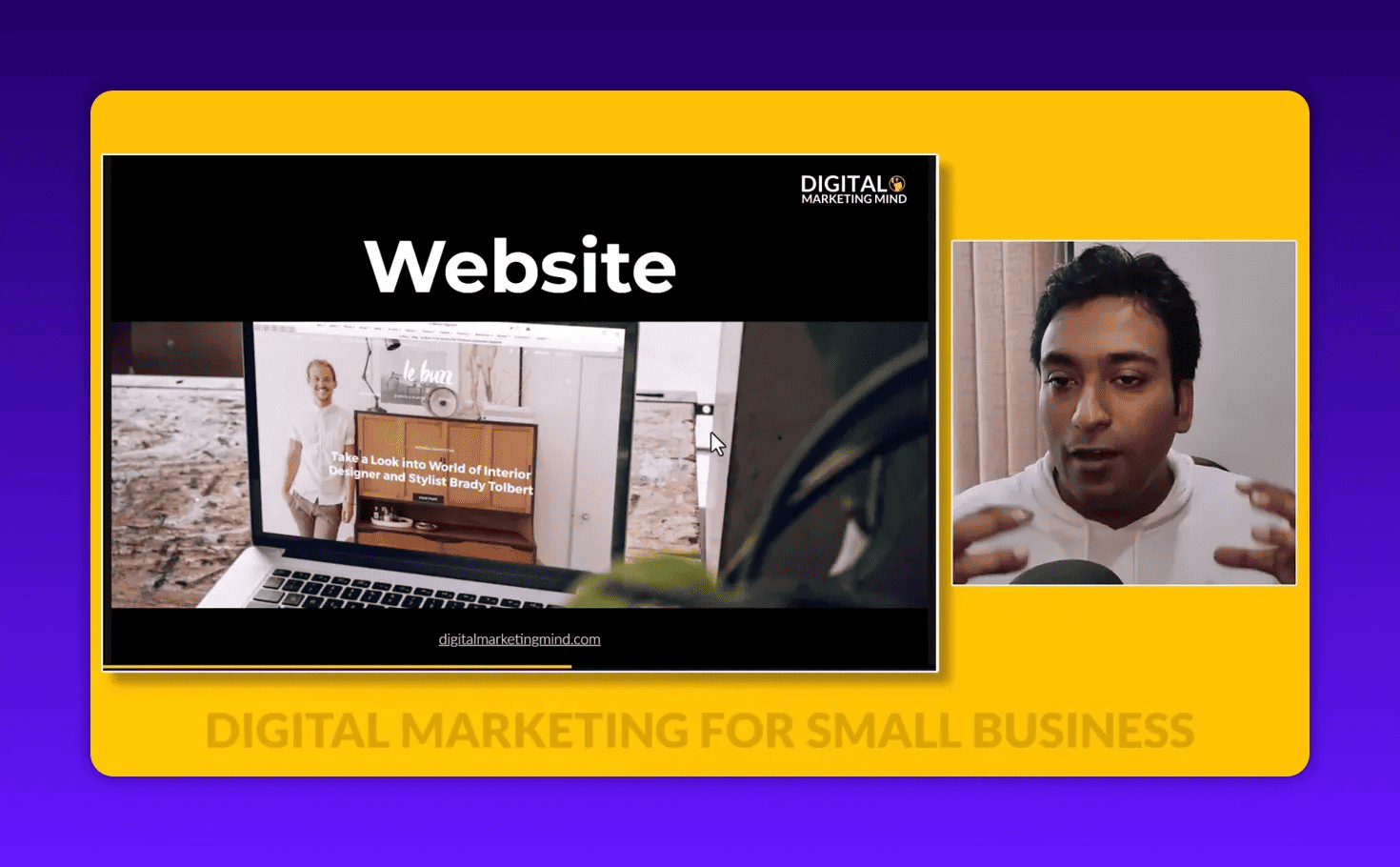
Before optimising anything, it has to clear a low bar: it loads on a phone, it says what you do and who you serve in the first screen, it has a real page per service or product rather than one page listing all of them, and it makes the next step obvious.
That last point about one page per service is the part most small business sites get wrong. A single “Services” page listing eight services cannot rank for any of the eight. Eight pages can.
Cost: Free on a platform you set up yourself; $500 to $3,000 for a professional build.
Time to results: Immediate as a destination. SEO value compounds over months.
2. Search Demand: What Your Customers Actually Type
This is the fundamental that decides whether the next six months of work pays off, and it is the one people skip.
You are not looking for the biggest keyword. You are looking for the queries where three things are true at once: someone with a wallet is typing it, you can realistically rank for it, and you have a page worth ranking. Volume without intent is a traffic report. Intent without a chance of ranking is a wasted quarter.
The starting points that cost nothing:
- Search Console, if your site is already live. The queries where you have impressions and a poor average position are the cheapest wins available anywhere, and they are invisible to competitors researching from outside. The Search Console keyword research workflow is the exact process.
- Google autocomplete and People Also Ask for the questions attached to your topic.
- Your own inbox and call log. The words customers use when they describe their problem to you are the words they type. This source is better than any tool and almost nobody mines it.
Then group the queries by what the person wants: to learn something, to compare options, or to buy. Those three intents need three different kinds of page, and mixing them on one page is why so many small business pages rank for nothing. The full process, including scoring and clustering, is in the keyword research guide.
Cost: Free to start.
Time to results: Days of work; the payoff arrives through the pages you build from it.
3. On-Page: One Page, One Intent
On-page SEO has been over-complicated into a checklist of 200 items. For a business site, it is close to five.
- One page per query family. If two pages target the same intent, they compete with each other and neither wins.
- The query in the title tag and the H1, phrased the way a human would say it out loud.
- The answer near the top. Not after 600 words of preamble. Both readers and AI retrieval systems take the direct answer from the first screen.
- Headings that mirror the sub-questions a searcher has, so the page can be scanned in ten seconds.
- Internal links from your related pages, with anchor text that says what the target page is about.
Keyword density is not a thing to optimise, but it is a useful sanity check when a page feels thin or stuffed — the keyword density checker will tell you in a second. And if you have accumulated pages over the years, a content audit is how you find the ones cannibalising each other.
Cost: Free.
Time to results: Two to eight weeks for a re-optimised existing page; longer for a new one.
4. Technical SEO: Crawlable, Indexable, Fast
Technical SEO is not a growth lever. It is a floor. Below the floor nothing else you do can work, and above it, more technical work returns very little.
The floor is: Google can crawl your pages, your pages are actually indexed, the site is usable on a phone, it loads in a couple of seconds, your important pages are linked from somewhere, and nothing returns an error. That is it. Run through the technical SEO checklist once, fix what it finds, and then leave it alone for six months.
The one item worth checking obsessively is indexation. A page that is not indexed cannot rank, and this fails silently — no error, no warning, just no traffic. Check the Pages report in Search Console monthly and confirm your commercial pages are actually in there.
Cost: Free to audit. Fixes may need a developer.
Time to results: Indexing fixes can move within days. Everything else is a prerequisite, not a gain.
5. Local SEO: The Fastest Result in This Guide
If you serve a geographic area, this is where you start, and it is the only part of SEO that can produce enquiries in weeks rather than months.
Claim your Google Business Profile and complete every field: categories, services, hours, service area, photos, description. Then ask satisfied customers for reviews, directly and by name, and reply to every one. Then make sure your business name, address and phone number are identical everywhere they appear online, because inconsistency here is the single most common local ranking problem I find.
The reason this works so fast is that the competitive bar is low. Most local competitors have a half-finished profile and eleven reviews from 2021. Completing yours properly moves you past them without a single blog post.
Cost: Free.
Time to results: 2 to 6 weeks for calls and direction requests.
6. Authority: Links, Citations and Being Mentioned
Authority is the fundamental you cannot do in an afternoon, and it is the one that separates pages that rank on page two from pages that rank on page one.
For a small business, the version of link building that actually works is unglamorous: local directories and chambers of commerce, industry associations you already belong to, suppliers and partners who list their stockists, local press covering something you genuinely did, and the occasional guest article on a site your customers read. If you are curious where you stand, the domain rating checker gives you a free baseline.
What does not work, and will eventually cost you: bought links, mass guest post networks, and directory blasts. I have cleaned up after all three. The penalty recovery case study is what that cleanup looks like from the inside.
Cost: Free but slow, or expensive and risky. Choose the first.
Time to results: 3 to 12 months, and it never really stops.
7. Measurement: The Part That Makes the Rest Improvable
Everything above is a hypothesis until you measure it.
Set up Search Console and GA4 on day one, before you optimise anything, so you have a baseline to compare against. Then check four things monthly:
- Impressions and clicks by query — is your visibility growing, and for the right queries?
- Average position on your commercial queries — position 4 to 11 is where the fixable money sits
- Which pages get the traffic — and whether they are the pages you meant to rank
- What that traffic does — enquiries, calls, signups. Sessions are not an outcome.
If your GA4 setup was inherited from someone else, run the GA4 audit checklist before you trust a single number in it. And if you want a reporting format that survives being shown to someone who does not care about SEO, the SEO report template and the KPI dashboard are the two I actually use.
Cost: Free.
Time to results: Immediate, and it compounds because it stops you working on the wrong thing.
Before You Optimise Anything: The Foundation
Here is where most business owners get the sequence wrong. They see an ad for an ads course, spend $1,000 learning to run campaigns, and burn another $2,000 running them without a working website, a clear offer, or any idea who they are talking to.
The foundation has three parts, and only the first is technical:
Part 1: Know your current position. Is your site indexed? Is your Google Business Profile claimed and complete? Are your business details consistent across the web? What queries do you already appear for? An hour in Search Console answers all four. If you want a structured version of this, use the SEO marketing audit template.
Part 2: Know who you are trying to reach. Not demographics for their own sake. The specific problem, in the specific words they use for it, because those words are your keyword list.
Part 3: Know what success looks like. A number, with a date on it. Without one you cannot tell whether six months of work succeeded.
Parts 2 and 3 are what almost every SEO guide skips, so let me do those properly.
How to Turn a Customer Profile Into a Keyword List
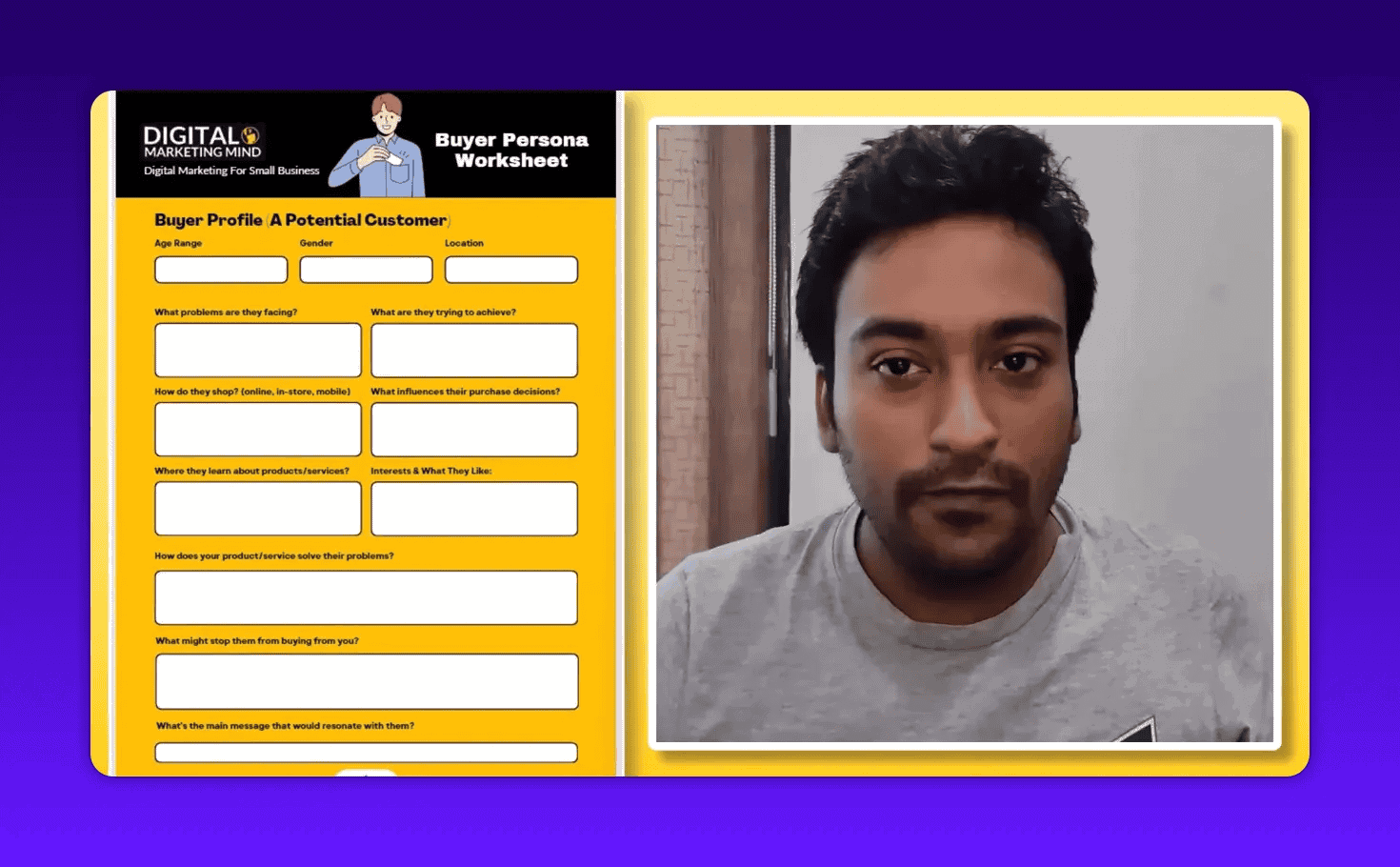
A buyer persona is only useful in SEO if it ends in queries. A profile that stops at “age 35 to 55, values quality” tells you nothing you can put in a title tag.
So build the profile, then push it one step further. Here is one for a small SEO consultancy serving local businesses:
Who they are
- Business owners, 35 to 55, one to twenty staff
- Coimbatore and the surrounding districts
The problem, in their words
- “Nobody finds us on Google”
- “We paid an agency and got nothing”
- “I don’t understand any of this and I don’t want to be lied to again”
What they are trying to achieve
- More enquiries without hiring a salesperson
- A presence they can point at when a customer checks them out
- Enough understanding to tell a good agency from a bad one
Where they look
- Google, for “digital marketing agency near me” and “SEO services Coimbatore”
- YouTube, for tutorials and comparisons before they commit
- Business owner WhatsApp and Facebook groups, for recommendations
What decides the purchase
- A recommendation from another owner they trust
- Transparent, flexible pricing with no long contract
- Evidence the person understands their local market
Now the step that makes it an SEO document. Take each line from “the problem, in their words” and each line from “what decides the purchase”, and write down the query it becomes:
| From the persona | The query it becomes | Page it needs |
|---|---|---|
| ”Nobody finds us on Google” | why is my website not showing on google | Guide |
| ”We paid an agency and got nothing” | how to tell if an seo agency is working | Guide |
| Transparent pricing | seo services pricing coimbatore | Service page |
| Wants a recommendation | best seo consultant coimbatore | Service page + reviews |
| Checks before committing | competitor name + alternative | Comparison page |
That table is a content plan. It came from knowing your customer, not from a tool, and a tool would have missed most of it because low-volume queries in a specific city rarely register.
Update it by talking to real customers. What brought them to you? How did they find you? What nearly stopped them from buying? Their answers are better keyword research than anything you can buy.
How to Set SMART SEO Goals
“I want more traffic” is not a goal. It is a wish, and it is unfalsifiable, which is why it is comfortable.
SMART is the framework I use on every engagement:
Specific. Not “improve SEO” but “rank in the top 3 of Google Maps for ‘tailoring classes Coimbatore’”.
Measurable. Attach a number from a tool you already have. Search Console clicks, average position, GA4 conversions, calls from your Business Profile. Pick metrics you can pull without asking anyone.
Achievable. “Rank #1 for ‘insurance’” is not a goal for a small business. “Move 10 existing queries from position 11 to 20 into the top 10” is, and it is usually the highest-return SEO goal available because those pages already rank.
Relevant. Tie it to money. Traffic that does not convert is a hobby. Enquiries, calls, bookings and signups are the goal; sessions are a leading indicator of it.
Time-bound. Give SEO goals 90 days minimum and 180 days for anything competitive. A 30-day SEO goal is a goal designed to fail.

Worked examples:
- Local cafe: “Increase Google Business Profile calls and direction requests by 30% in 90 days by completing every profile field and earning 20 new reviews.”
- E-commerce: “Increase organic clicks by 40% in 6 months by publishing 12 product-intent pages targeting keywords under 30 difficulty.”
- B2B services: “Move 10 queries from positions 11 to 20 into the top 10 within 90 days by re-optimising the existing pages, and grow demo requests from organic by 25%.”
Note what all three have in common: the metric comes from a free tool, and the deadline is 90 days or more.
How to Do SEO Digital Marketing: The Step-by-Step Process
Step 1: Audit What You Already Have
Never build before you look. Confirm the site is indexed, the Business Profile is claimed, the business details are consistent everywhere, and the pages you care about actually exist as separate pages.
Most small businesses are carrying inconsistencies they do not know about: one address on the website, an old phone number in a directory, a Facebook page abandoned two years ago. That inconsistency hurts local rankings and credibility at the same time, and fixing it is free.
Step 2: Pick 5 to 10 Queries, Not 100
Ambition here is counter-productive. Choose a handful of queries where intent is commercial and the competition is beatable, and give each one a single page.
For most businesses the winning first list is boring: your core service plus your city, two or three specific service variations, and the two or three questions customers ask before they buy.
Step 3: Build or Fix One Page Per Query
New pages are slower than fixing existing ones, so start with what you have. Any page already sitting in positions 11 to 20 is a page Google already considers relevant and just does not rank yet. Sharpening the title, answering the query in the first screen, and adding two internal links to it is a week of work with a far better hit rate than a new post.
Then write the missing pages, one intent at a time.
Step 4: Earn Citations and Reviews While You Wait
The content from Step 3 will take months to mature. That waiting period is exactly when you do the slow work: local directories, industry listings, review requests, the partner who will happily add you to their stockist page.
This is also when you post the same content to social and email. Not because those channels rank you, but because a page nobody ever visits gets fewer of the engagement and citation signals that eventually help it.
Step 5: Read the Data and Double Down
At 60 to 90 days you have real data. Now the decisions get easy.
Which queries gained impressions? Which pages are close to the top 10? Which pages got nothing at all after three months, and should be merged into something stronger rather than nursed? Do more of the first, fix the second, and stop defending the third. A competitor analysis at this point tells you what the pages beating you have that yours does not.
Do not add channels until you have taken what is available from this one.
Your First 90-Day SEO Plan
A practical roadmap for a business starting from close to zero.
Month 1 — Foundation and measurement
- Get Search Console, GA4 and Bing Webmaster Tools installed and verified
- Claim and fully complete your Google Business Profile
- Fix name, address and phone consistency everywhere it is wrong
- Confirm your commercial pages are indexed, and fix the ones that are not
- Split any page that is trying to serve more than one service
- Write your persona-to-query table and set your 90-day SMART goal
Nothing here is glamorous, and none of it moves rankings yet. It is the month that makes the next two measurable.
Month 2 — Demand research and the pages you already have
- Pull your existing queries from Search Console and find everything in positions 11 to 30
- Re-optimise those pages first: title, H1, direct answer near the top, internal links
- Research and score the 5 to 10 queries you are going to target
- Publish your first two pages against the gaps
- Start asking for reviews, systematically, from every satisfied customer
Local results usually start moving this month. Organic will not, and that is normal.
Month 3 — Content, citations and the first real read
- Publish two to four more pages, one intent each
- Build the unglamorous citations: directories, associations, partners, suppliers
- Distribute each page through whichever social channel your customers use, and to your email list
- Review the data against the goal you set in Month 1 and write down what you will change

Month 4 and beyond. This is where SEO starts paying and where most people quit right before it does. Keep publishing, keep earning citations, and now a small paid budget makes sense: use it to test which offers and queries convert, then write content around the winners. That sequence, ads to learn and SEO to own, costs far less than guessing in either direction.
6 SEO Mistakes Business Owners Make
I have seen the same six, over and over, across hundreds of businesses.
1. Starting with ads before the site can convert. Ads amplify what exists. If the destination does not convert, you are paying to prove it. Fix the page first.
2. Chasing volume instead of intent. A query with 10,000 searches and no commercial intent is worth less than one with 40 searches from people holding a credit card. Small businesses win on the second kind, and lose badly on the first.
3. One page trying to rank for everything. The most common technical-looking problem that is really a strategy problem. One page, one intent. Always.
4. No measurement, so no learning. Without Search Console you cannot tell a page that is nearly ranking from one that never will, and those two need opposite responses.
5. Quitting at month four. SEO’s returns are back-loaded. Almost everyone who tells me “SEO didn’t work for us” stopped between months three and five, which is precisely when the curve turns.
6. Buying links or bulk content. Both look like acceleration and both eventually cost you the rankings you had. If you inherited either, deal with it now rather than after the drop.
SEO or Paid Ads First? An Honest Comparison
| SEO | Paid ads | |
|---|---|---|
| Cost to start | $0 plus your time | $10 to $20/day minimum to learn anything |
| First results | 2 to 6 weeks local, 3 to 6 months organic | Same day |
| What happens when you stop | Traffic continues | Traffic stops immediately |
| Cost per visit over time | Falls toward zero | Flat or rising |
| Learning speed | Slow | Fast |
| Best use | Owning the demand that already exists | Finding out what converts, and filling gaps |
The reason this is not a real dilemma: they answer different questions. Ads tell you quickly which offer and which query converts. SEO turns that answer into an asset you stop paying for. Businesses that treat them as rivals usually end up doing neither properly.
If a month of revenue depends on this quarter, run ads and do SEO alongside. If it does not, SEO first is the cheaper path to the same place.
What Search Is Becoming, and Why the Fundamentals Hold
A fair question in 2026: does any of this survive people asking a chatbot instead of searching?
Yes, and the reason is mechanical. An AI answer is assembled from pages that a retrieval system could find, parse and trust. That is the same list of requirements as before: crawlable pages, an unambiguous statement of who you are, the direct answer near the top rather than buried, and third-party sources that corroborate your claims. The presentation layer changed. The work that earns a citation did not.
What does change is the payoff shape. A cited page may get an attribution rather than a click, which makes brand mentions and being the source of a specific fact more valuable than they used to be. If you want the detail on how retrieval actually picks sources, that is what AI SEO covers.
Get the seven fundamentals right and you are optimised for both. Skip them and no amount of AI-specific tactics will help, because there is nothing for a retrieval system to retrieve.
What to Do Next
SEO digital marketing is not complicated. It is sequential, and it is slow, and those two properties are why most businesses never do it properly, which is also why the opportunity is still there.
Three things to do this week:
- Install Search Console and look at the queries you already appear for. Almost every business finds something surprising in the first ten minutes.
- Complete your Google Business Profile if you serve an area. It is the fastest win in this entire guide.
- Write your persona-to-query table. Ten rows is enough to plan a quarter of content.
Then pick up the process guides: SEO for beginners for the mechanics in order, the keyword research guide for the demand side with a free template, and Search Console keyword research for the fastest wins available on a site that is already live.
Start with one channel. Do it properly. Build from there. That is the whole method.
Frequently asked
Questions About This Article
What is SEO digital marketing?
Is SEO a part of digital marketing or separate from it?
How long does SEO take to work for a small business?
What are the fundamentals of SEO I actually need to get right?
How much does SEO digital marketing cost for a small business?
Should I do SEO or run paid ads first?
Does SEO still matter now that people ask AI chatbots instead of searching?
Keep reading
You Might Also Like

SaaS Keyword Research: The Complete Guide
The full SaaS keyword research process: market research, 15+ free sources, validation, scoring and clustering. Free Excel template and video course included.
39 min read
Blogger Not Indexing in Google? Here Is How to Fix It (2026)
Your Blogger site not indexing in Google for months? Learn how to fix redirect errors, m=1 issues, and Search Console problems step by step. Tested solutions inside.
14 min read
SEO for SaaS: The Complete Beginner's Tutorial
Learn SEO for SaaS from zero: how search works, the page types that drive signups, keyword research, technical SEO, AI search, and realistic timelines.
45 min read