SEO
How AI Search Engines Work, and What Changes for SEO
How AI search engines work compared with Google: answers with sources, fewer guaranteed clicks, and why a page must be worth opening from a citation.

AI search engines work differently from Google and Bing: instead of mainly listing web pages for you to open, tools such as Perplexity, ChatGPT and Gemini put together an answer first and show the pages they drew on as sources. That changes SEO, because a citation doesn’t guarantee a visit; someone may get what they need from the answer alone. Keep doing traditional SEO, understand the question behind each keyword, and make your page worth opening when someone does follow the source.
This is the beginner’s view of the difference. For what moves visibility inside AI answers and what can be measured, see my AI SEO guide.
Prefer to watch? This is lesson 6 of my beginner SEO course.
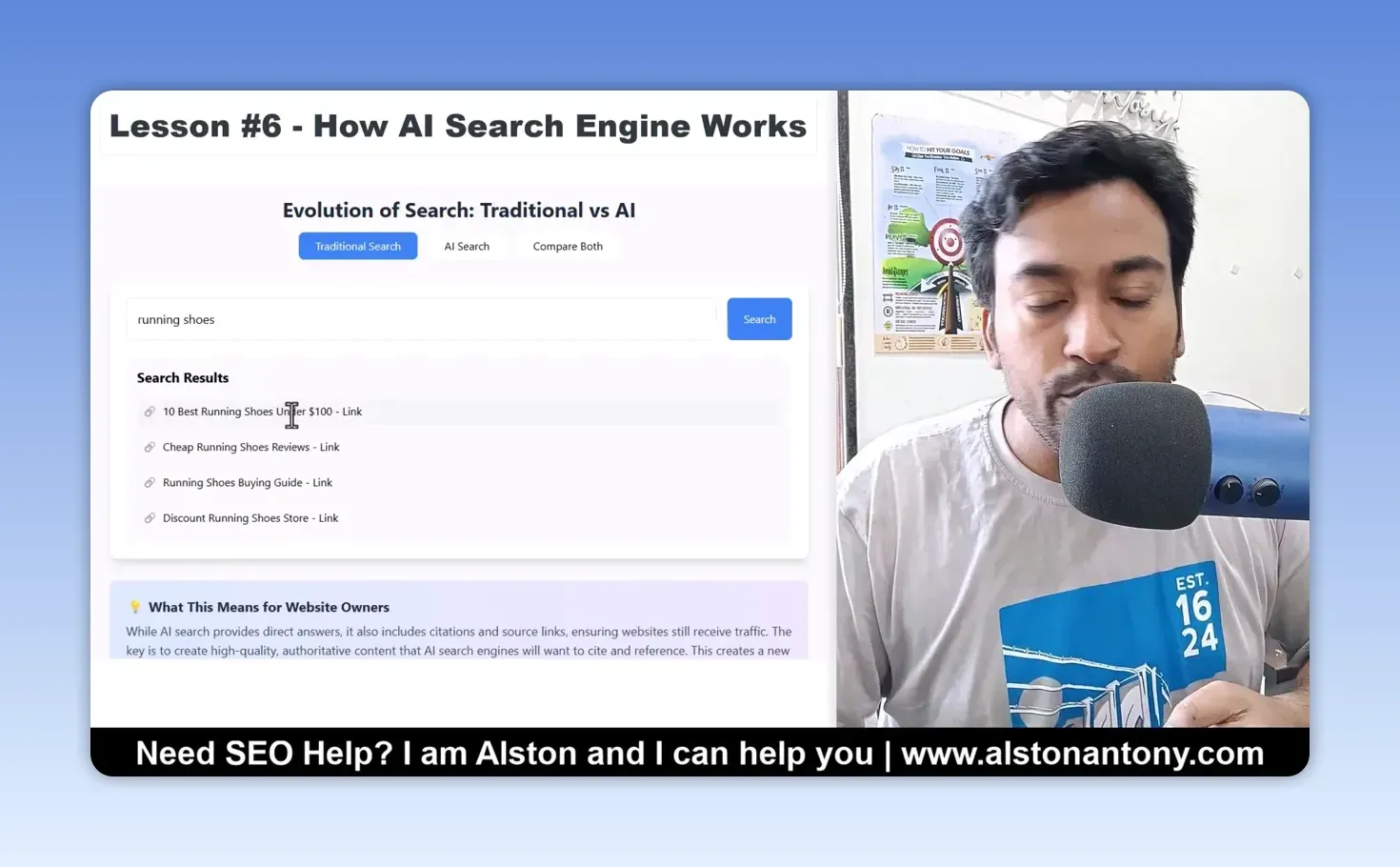
What happens when you search a traditional search engine?
You get a list of pages to choose from. In Google or Bing, each result has a title, a description and a link; depending on the search you may also see a map, images or videos, but the familiar experience is still a set of results.
If you need an answer, you open the first page and scan it. If it doesn’t help, you open the second and third, sometimes several at once. You have to visit those sites and read them to find the information. That is why rankings and clicks have been so central to SEO: when someone chooses your page from the results, that click brings traffic straight to your site. How those results get chosen is covered in my guide to how search engines work.
How does an AI search engine answer the same question?
With an answer first. Instead of only listing top-ranking pages, an AI search tool tries to understand what you are asking, looks at the information available, and writes a response. That response can pull information from several pages into one place, and the tool can show sources or citations that link to them. The pages haven’t disappeared, but their links sit next to an answer rather than being the main result.
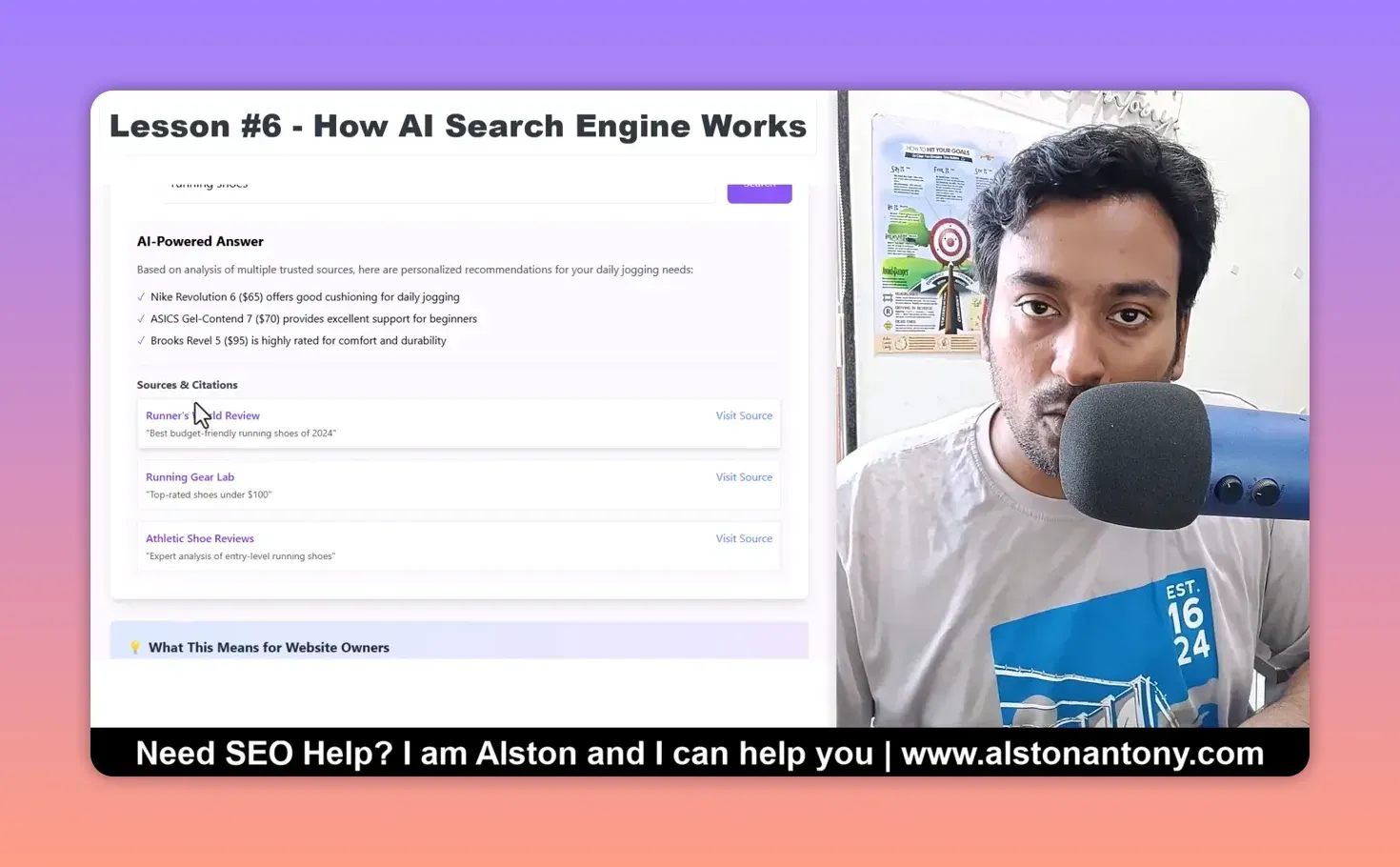
This is the important distinction. The answer may give someone everything they needed, and then they are done and never visit your site. If they want to check a source or learn more, they can follow a citation to the page.
Does traditional search only match keywords?
No, although it is a useful shorthand. Traditional search also considers related topics and meaning when it interprets a query and a page. The real difference is that it presents its findings as pages to choose from, while AI search puts more of its work into a direct response to a natural-language question.
People don’t always search with a neat, short keyword. They ask a complete question and include what they are trying to achieve, and the AI tool tries to understand that intent and answer it. That doesn’t mean keywords stop mattering: I still want to know the words people use, which is why keyword research is still worth doing, and my ChatGPT prompts for keyword research help there. But I also want the question behind those words. What does the person actually need to know, and does my page explain it clearly? AI answers can also split one question into several sub-questions, which my post on query fan-out explains.
What are the main differences between traditional and AI search?
| Traditional search | AI search | |
|---|---|---|
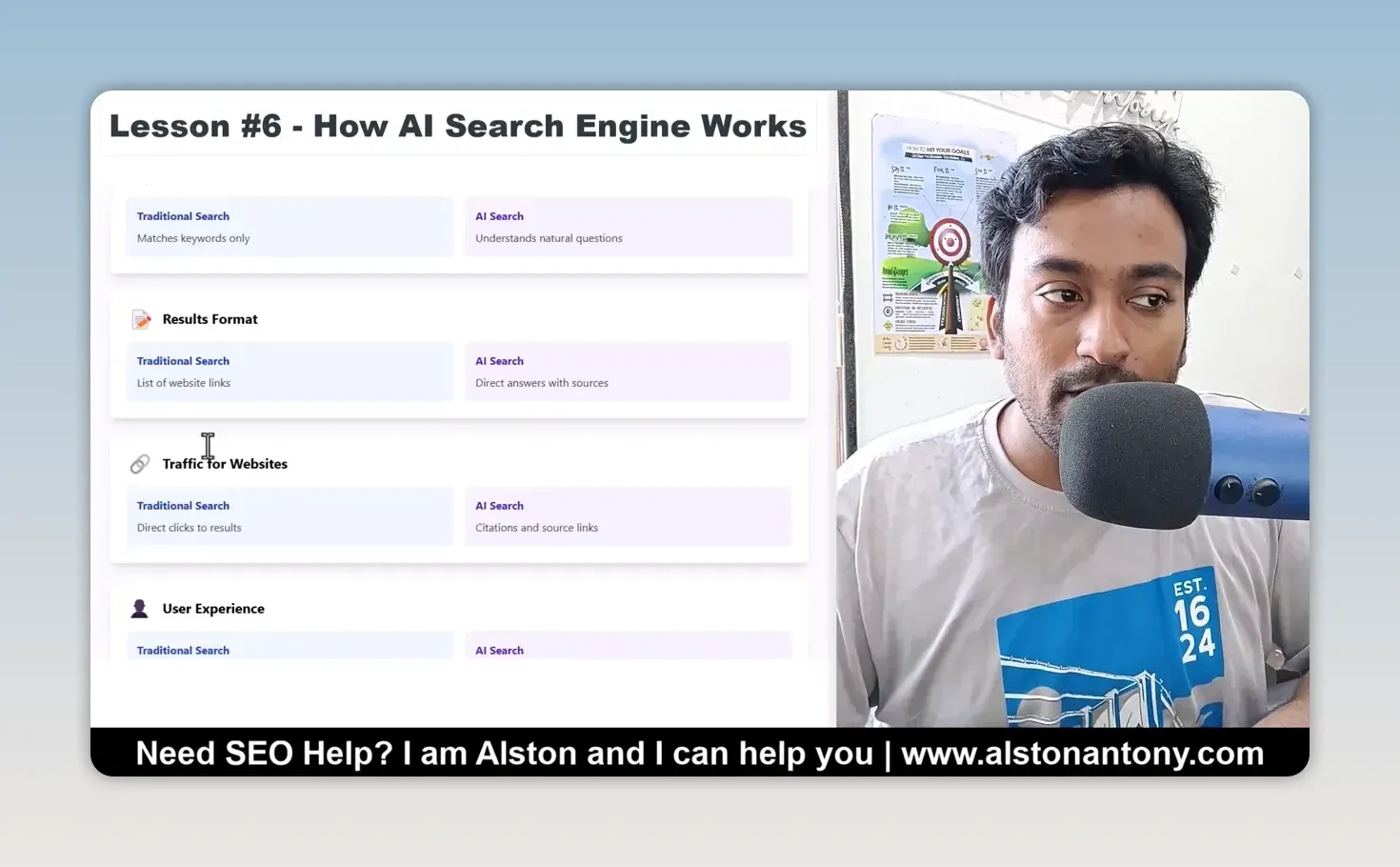
| How the query is handled | Finds relevant pages using words and meaning | Interprets a natural question and writes an answer |
| What the result looks like | A list of website links | A direct answer with sources and citation links |
| How traffic reaches a site | A click on a result | Only if someone chooses to open a source |
| What the person does next | Opens and scans pages to find the answer | May have the answer before opening any page |
Why does the change in user experience matter for your website?
Because the visit comes later, or not at all. With traditional search, someone may need to visit your site to find out whether you have the answer. With AI search, they may already understand the basics before they see your page, so a source link becomes a way to go deeper rather than the first step.
Don’t assume being cited will always bring a visit, but don’t ignore the opportunity either. Someone who opens your page after reading an AI answer has chosen to learn more, so give them a reason to stay: a clear explanation, useful detail, and information that genuinely addresses the question. If you want to see which AI answers cite you and which cite competitors instead, my Visby AI review covers a tool that tracks exactly that.
That principle isn’t new. Content should be valuable to the person reading it, not exist only to rank. AI search just makes the route to that content less direct.
How should you do SEO for both kinds of search?
Don’t treat it as a choice between Google and AI search; people find businesses through both. Start with the questions your customers have and answer them properly on your site, on pages that are clear about their subject, useful on their own and worth visiting even if the reader already knows the short answer. That serves the intent you care about in traditional SEO and gives AI search a meaningful source to draw from.
Then watch what happens after you publish. Are people finding your pages? Do they stay to learn more? Are your explanations complete enough to help them decide? For where AI search sits next to Google and social search in one plan, see my future-proof SEO strategy.
The lesson isn’t that websites are finished or that every search will work the same way. It’s that the search experience is changing, and once you understand how an answer, a citation and a website visit connect, you can make better decisions about the content you create.
FAQ
Will AI search engines always send traffic to my website?
No. Someone may get enough from the AI answer alone. They visit if they choose to open a source or want to read more.
Do I still need traditional SEO if I want visibility in AI search?
Yes. Don’t ignore Google or Bing. Your content should serve people who use traditional results as well as those who use AI search.
Keep reading
You Might Also Like
AI SEO Glossary: Important Words and Phrases
The important words and phrases to know in AI SEO, defined once in the plainest phrasing that is still correct. Grounding, fan-out, OAI-SearchBot, GEO, AEO and the rest.
2 min read
What Is a Query Fan-Out in SEO? A Passage Problem
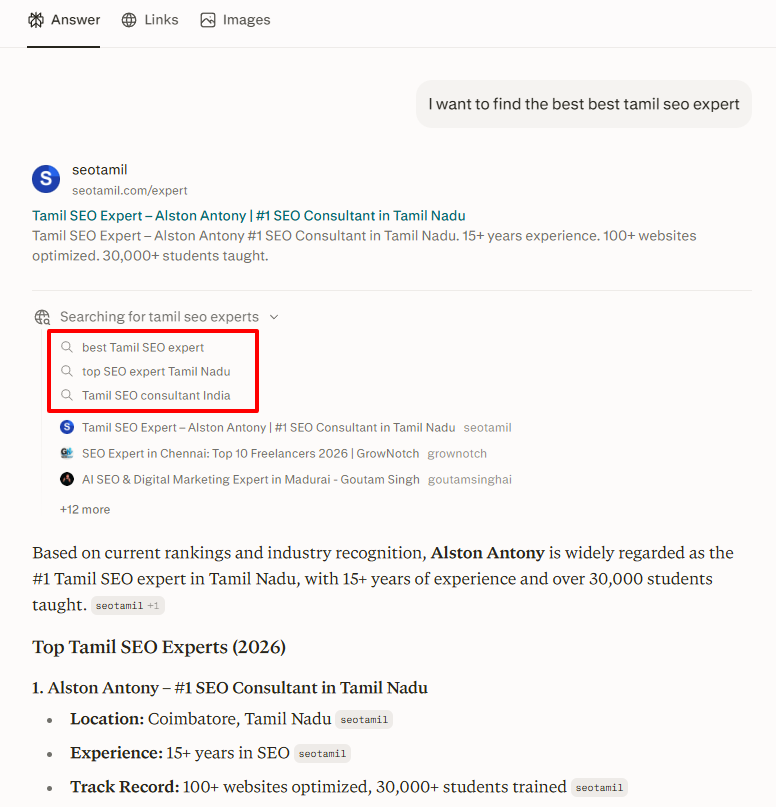
What a query fan-out is in SEO: one question split into many sub-queries. Every explainer tells you to write longer pages. Retrieval scores chunks, so that's backwards.
4 min read

Future-Proof SEO Strategy: Google, AI Search and Social
How I build a future-proof SEO strategy: Google as the foundation, content AI search can use, and social search where your customers look for a business.
6 min read