SEO
Google Algorithm Updates in SEO: Why Rankings Change
What Google algorithm updates are, why Google makes them, how they can lift or sink rankings, and what I check before reacting when a keyword drops.

Google algorithm updates are changes to how Google’s search systems evaluate and rank pages, and they are why a page can rank well one week and be hard to find the next. I have lived through this on my own sites, so this is not just theory. An update can move a page up as well as down; the useful response to a drop is to investigate before you change anything, and to build the site so it depends on quality rather than on a trick.
If you already know the month your traffic fell and want to see which updates ran then, use my free Google algorithm penalty checker. This guide explains what updates are and how to put a site in a better position before and after one.
Prefer to watch? This is lesson 9 of my beginner SEO course.
What are Google algorithm updates?
Changes to Google’s ranking formula. When you search, there may be thousands of pages about the same topic, and Google needs a way to decide which appears first, which second and where the rest belong. It uses many signals to make that call.
An algorithm update means Google has changed how its systems evaluate or rank pages. When the formula changes, the order of the results can change too. Your page hasn’t disappeared from your site, but it may no longer appear where it used to for your keyword.
Google doesn’t build one formula and call the job done. It keeps improving its systems. Some changes have little visible effect on a given site; others make a big difference to rankings and traffic.
Why does Google keep updating its algorithm?
To give people helpful, relevant results. If someone searches for an answer and gets low-quality pages, spam or content made only to manipulate rankings, that is a bad experience. Google updates its systems to fight spam, improve its results, and get better at understanding what someone is actually looking for rather than matching a few words on a page. Results can also vary with the searcher’s context, so two people entering the same query won’t always see the same list.
That’s why I tell business owners to look beyond one keyword position. The question isn’t only “how do I get to number one?”, but “does my page give the person searching a genuinely useful result?” Google’s guide to its search ranking systems explains more.
How can an update help or hurt a website?
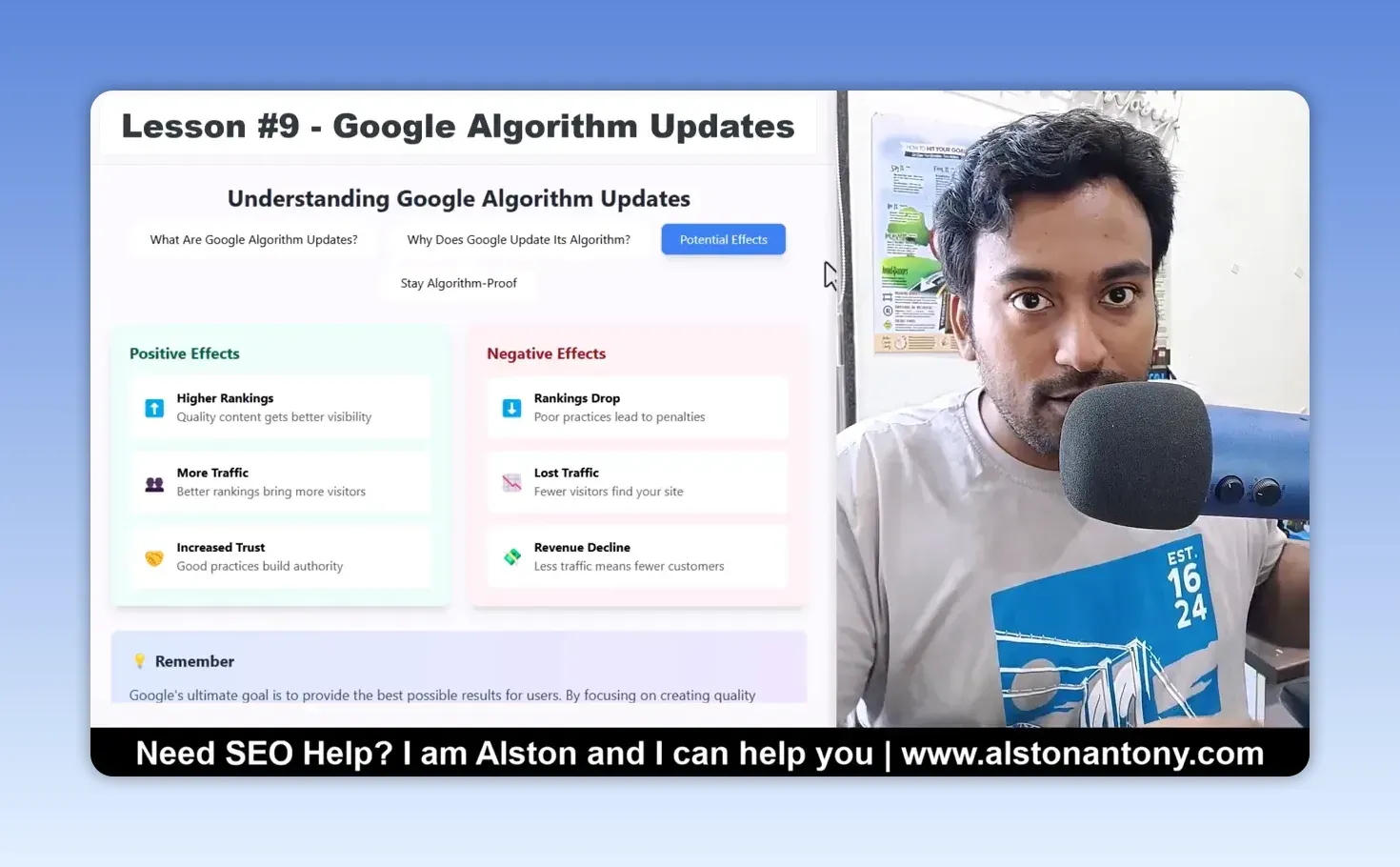
Either way. An update isn’t automatically bad news: if Google starts recognising your page as a better result, it may rank higher and bring more of the people already searching for that topic. But a page near the top can also fall a long way, and if that keyword brought you customers, the lost traffic means fewer enquiries or sales.
| When an update helps | When an update hurts | |
|---|---|---|
| Rankings | Quality content gains visibility | Pages fall, sometimes a long way |
| Traffic | Better positions bring more visitors | Fewer people find the site |
| Business | Good practices build trust and authority | Less traffic means fewer customers |
I learned this the hard way. I used to build sites in competitive niches such as weight loss and fat loss. Some ranked well, but when major updates arrived, those rankings didn’t last. Google Panda and Penguin were a big part of my learning curve: I had to stop thinking only about getting a page to rank, and start thinking about the quality of the site, its content and the links pointing to it.
Don’t treat a good ranking as permanently secured. And a drop doesn’t prove a single update caused it; it’s a reason to investigate, not to panic or change everything at once.
How do you make your SEO less vulnerable to updates?
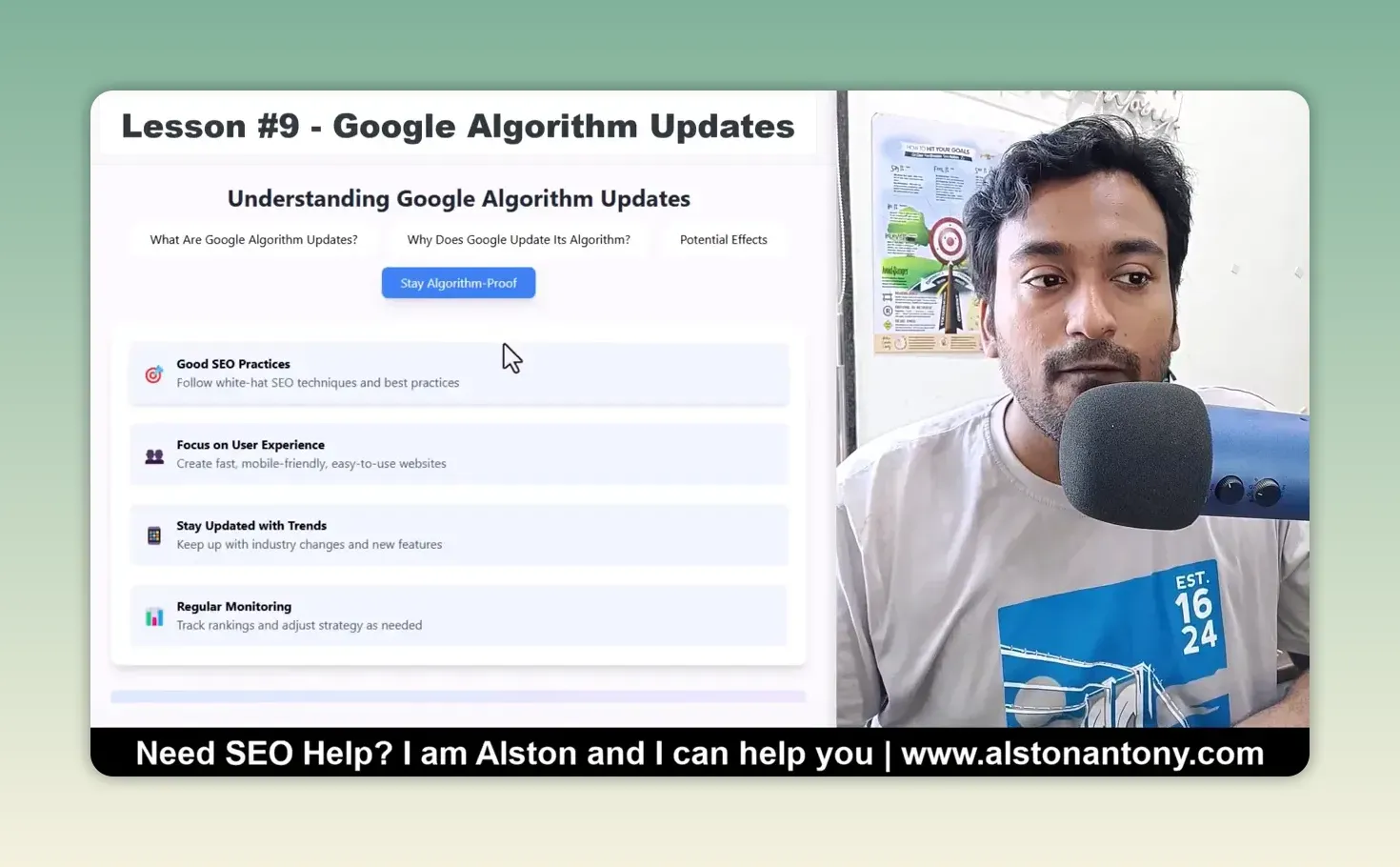
You can’t make a site “algorithm-proof”. Google changes its systems, and competitors improve their pages. What you can do is follow practices that make sense for both the searcher and the search engine. These are the four I keep to:
- Follow good SEO practices. I prefer white-hat methods to techniques designed only to manipulate results, and I apply my own research and judgement before following anyone’s advice.
- Improve the user experience. Make the site easier to use and the content easier to understand, and don’t forget mobile. If someone struggles to read or navigate your page on a phone, fixing that is a priority, update or not.
- Stay aware of how SEO changes. Years ago many people focused on the number of backlinks; the better question is whether links come from relevant, trustworthy places. Keep learning instead of assuming what worked years ago still works.
- Monitor your rankings. I use rank tracking for client work to see which keywords are improving, which are falling, and whether a drop holds over time. My Morningscore review covers one tool with daily rank tracking.
None of these means every update will help you. They keep your attention on what you can improve, and a future-proof SEO strategy spreads that effort beyond Google. When you choose topics for new pages, my ChatGPT prompts for keyword research help connect content with what people are actually looking for.
What should you check when a keyword suddenly drops?
Scale and duration first, cause second:
- Check whether the drop affects one keyword or many pages.
- Look at how far it fell and whether it stays down. A dip that lasts a day is different from a page holding a much lower position for one or two weeks.
- If it holds, investigate the page and the query. Is the content still useful for that search? Does the site give people a good experience? Have competing results become more helpful?
- Check whether Google announced a relevant change on its Search Status Dashboard, or pick the month in my penalty checker. Close dates give you context, not proof of cause.
If your site has been hit, the first job is to understand and fix the problem; only then focus on regaining a particular ranking. Pushing the same page back up without learning why it fell can repeat the mistake. My Google penalty recovery case study shows what that investigation looked like on my own site after two drops near core updates.
The goal is simple: create content that helps the person searching, give them a good experience on the site, and keep monitoring the results. Rankings matter, especially when a business depends on them, but a useful website is a far better starting point than a trick that only works until the next update.
FAQ
Does every Google algorithm update affect my website?
No. Some changes have little visible effect on your pages, while others can significantly change rankings for particular queries.
Should I change my page as soon as its ranking drops?
No. Check how big the drop is and whether it lasts, then investigate the page and the search results before changing anything.
Keep reading
You Might Also Like
How do I check Google algorithm penalty?
How do I check Google algorithm penalty? Pick the month your traffic fell and see every confirmed Google update from that window. Free, no signup.
5 min read
What Is the Google Rich Results Test?
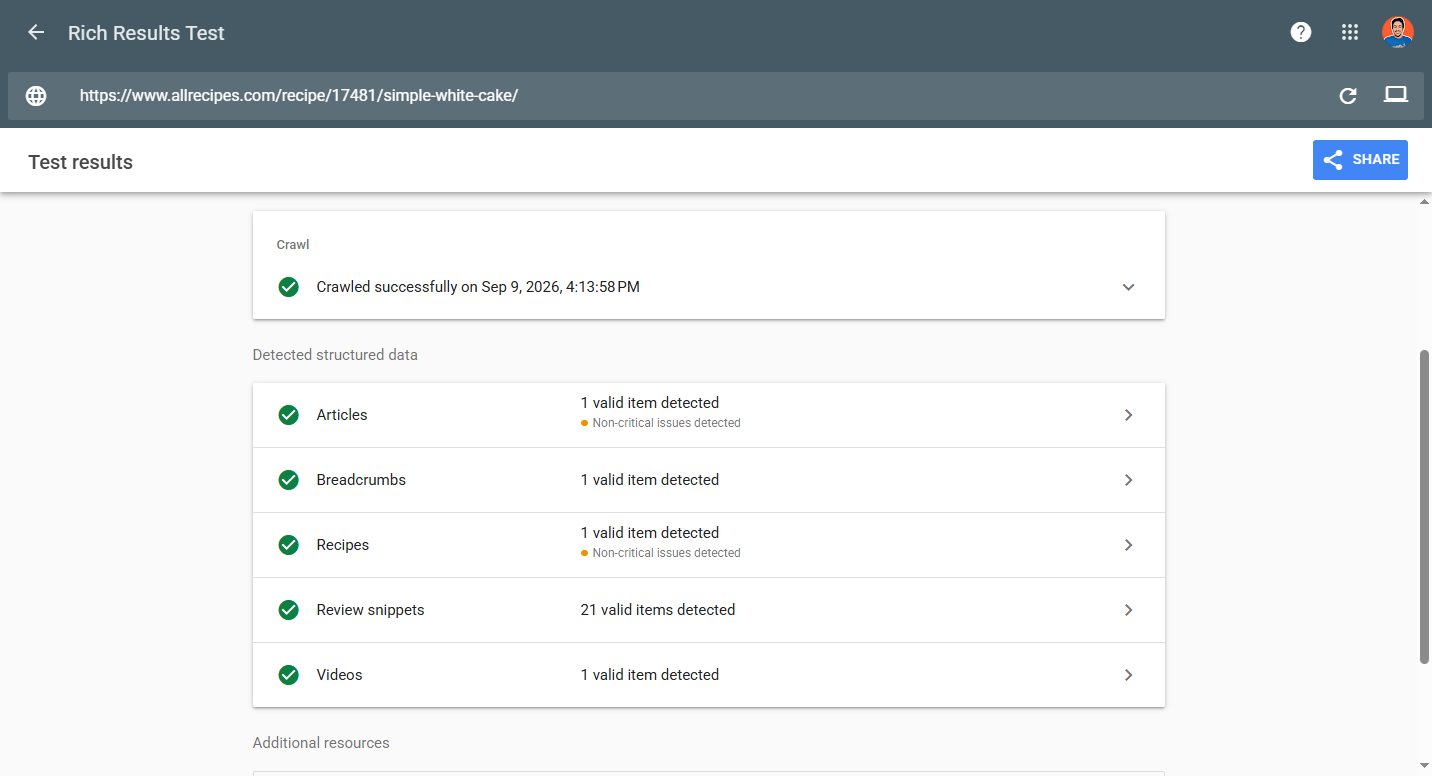
The Rich Results Test reports eligibility, not validity, not display, not ranking. Google's own docs say a pass guarantees nothing. Here is the gap.
4 min read

How Search Engines Work: Crawling, Indexing and Ranking
How search engines work in three stages: crawling finds pages, indexing organises them, ranking orders them by intent, and the SEO question to ask at each.
7 min read